

Winning better clients starts by thinking like one
Most architects spend a large part of their professional lives trying to explain why clients should choose them.
They refine their portfolios. They update their websites. They prepare capability statements, submissions and fee proposals. They describe their design approach, experience, values and process. They try to make visible what they believe makes the practice different.
All of that can be useful.
But it is not where the real shift occurs.
If you want to win better clients, it is usually not enough to become better at describing yourself as an architect. You need to become better at understanding what the client is trying to decide.
That sounds simple. In practice, it is often missed.
Architects naturally see the world through the lens of architecture. They think about design quality, spatial possibility, planning constraints, construction complexity, documentation, authority approvals and built outcomes. These matters are important, and the client is relying on the architect to understand them.
But the client is usually thinking about something else as well.
They are thinking about risk, trust, money, time, internal pressure, and whether the appointment will make the process easier or harder.
In many cases, the client is not simply asking, “Who is the best architect?”
They are asking, “Who can we trust to help us get through this?”
That is a very different question.

The client’s decision is rarely just about design
Architects sometimes overestimate the extent to which clients are selecting purely on design capability.
Good clients do care about design. Some care very deeply. However, even design-focused clients have broader concerns. They need to know whether the architect understands the brief, can manage competing priorities, communicate clearly, work with others, protect value and help them make decisions at the right time.
This is especially true for clients who are not regular procurers of architectural services. For them, the process may be unfamiliar and intimidating. They may not know which risks matter, which decisions are urgent, what information they should provide, or how to judge whether the project is progressing well.
Even experienced clients carry risk. They may have boards, funders, partners, stakeholders, tenants, communities, government agencies or internal teams to satisfy. The architect is rarely dealing only with the person sitting across the table.
That is why the client’s experience of the architect often begins well before a project is won.
It begins with the first conversation. It begins with the clarity of the proposal. It begins with whether the architect appears to understand the client’s real problem, not just the building type.
Listening is not passive
Architects often say they listen. Most believe they do.
But good listening is not simply allowing the client to speak. It is an active professional skill.
It involves hearing what is said, noticing what is not said, testing assumptions, clarifying priorities and reflecting the client’s concerns back in a way that makes them feel properly understood.
A client might say they want design excellence, but the deeper issue may be stakeholder confidence. They might say they need speed, when the real concern is avoiding another delayed approval process. They might ask for innovation, while still needing reassurance that cost and delivery risk will be controlled.
If the architect responds only to the stated request, they may miss the client’s underlying need.
This is why thinking like the client does not mean abandoning architectural judgement. It means applying that judgement to the client’s situation, not just to the design problem.
The best architects do not merely ask, “What can we design?”
They also ask, “What is this client trying to achieve, avoid, protect or prove?”
Stop selling the practice. Start reducing uncertainty.
Much of what architects call marketing is really an attempt to reduce uncertainty.
The client does not yet know whether they can trust you. They do not know whether your process will suit them. They do not know whether your team will listen, challenge, guide and deliver. They may like your work, but still be unsure whether you are the right fit.
Your task is not just to impress them. It is to help them become confident.
This has practical implications.
A proposal should not simply describe your services. It should explain how those services will help the client navigate the project. A website should not only display completed work. It should help prospective clients recognise the problems you are good at solving. A first meeting should not be dominated by your credentials. It should help the client feel that you understand their context.
This is not about being submissive to the client. Nor is it about saying whatever the client wants to hear. In fact, strong clients often value architects who can challenge them intelligently.
But challenge is far more likely to be accepted when the client first feels understood.
The three questions behind most client choices
Behind many client decisions sit three practical questions.
First, does this architect understand what we really need?
Not just the brief. Not just the schedule of accommodation. Not just the site constraints. The real need may include internal alignment, commercial confidence, brand expression, community trust, operational efficiency, long-term flexibility or a smoother decision-making process.
Second, can we trust this architect to deliver?
Delivery is not only about producing drawings. It includes communication, coordination, programme awareness, cost sensitivity, risk management and the ability to keep the process moving without losing sight of the outcome.
Third, will this architect make the process easier or harder?
This is the question architects sometimes underestimate. Clients do not want unnecessary complexity. They do not want to feel foolish. They do not want surprises that could have been avoided. They do not want to chase for clarity. They do not want to discover too late that assumptions were wrong.
A practice that can make the process feel clearer, calmer and more controlled has a real advantage.
The work begins before the work begins
The mistake is to think client experience starts after appointment.
It starts much earlier.
It starts when the client sees your website, reads your article, hears you speak, receives your proposal or sits in the first exploratory meeting. Every one of those moments gives the client evidence of how you think, how you communicate and how you might work with them.
That is why the strongest practices do not rely only on portfolio strength. They build trust through every part of the client journey.
They make their value clear.They explain their process without hiding behind jargon.They show evidence of judgement.They respond to the client’s context.They listen before they prescribe.
The more complex the project, the more important this becomes.
Clients rarely choose architects solely because they admire the finished work. They choose architects because they believe that practice can help them move from uncertainty to confidence.
Think like the client, then lead like the architect
Thinking like a client does not mean becoming less of an architect.
It means becoming more useful as one.
The client does not need you to mirror their thinking. They need you to understand it well enough to guide it, test it, challenge it and improve it.
That is where trust begins.
If you can see the project through the client’s eyes, you are better placed to explain what matters, identify what is missing, manage expectations and show where your architectural judgement creates value.
Better clients are not won by louder claims. They are won through relevance, clarity and confidence.
The architect who understands the client’s decision is far more likely to become part of it.
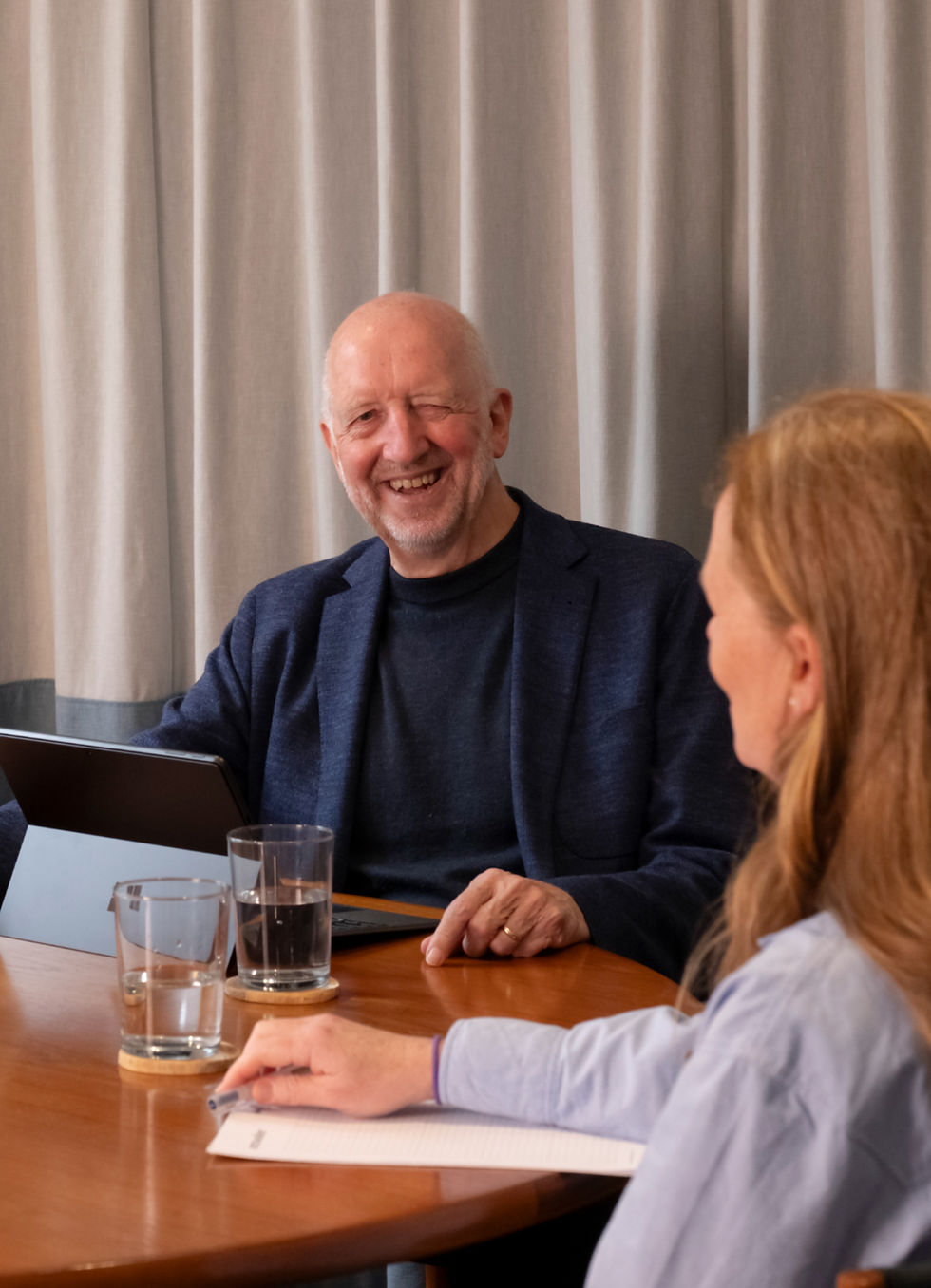
Ross Clark has worked across the architecture industry in almost every capacity — the guidance that he brings from decades working in this industry has been tried, tested and refined working closely with practices just like yours.
If you’re thinking about the next stage of your practice, or want an experienced perspective on how things are currently set up, please reach out.


