

Why your best submission didn’t make the shortlist
Updated: May 26
One of the most useful experiences an architect can have is to sit on the other side of the table.
Not as the person submitting the proposal. Not as the person hoping the client will understand the practice’s value. Not as the person wondering why the shortlist went another way.
But as one of the people reviewing the submissions and helping the client decide.
I have sat on selection panels and advised clients through procurement processes for significant public and private projects. Those experiences change the way you see architectural submissions.
They also make one thing very clear: many good practices rule themselves out earlier than they realise.

What is the client really deciding?
Architects often assume a submission is primarily an opportunity to present the practice. Naturally, they include project images, capability statements, team biographies, methodology, awards, values and relevant experience. All of this can matter.
But the client is not reading the submission as a neutral description of the practice. The client is trying to make a decision.
That decision is usually more anxious, more complex and more practical than architects imagine.
The client wants to know whether this practice can be trusted with their problem, their money, their stakeholders, their reputation and their project risk.
That is a different question from, “Is this a good architecture practice?”
Capability is not the same as confidence.
Many practices that miss the shortlist are capable of doing the work. That is what makes the outcome so frustrating.
They may have relevant experience. They may have strong people. They may have delivered similar projects. They may even have better design credentials than a competing firm.
But capability alone does not win if the client cannot clearly see how that capability applies to their situation.
Selection is not only an assessment of talent. It is an assessment of confidence.
Can we trust this team? Do they understand what matters to us? Will they make the process easier or harder? Can they manage the risks we already know about? Can they handle the risks we have not yet identified?
The winning submission is often the one that answers these questions most clearly.
A submission is not a practice biography.
Too many submissions describe the practice as though the client has asked, “Who are you?”
That is only part of the task.
The better question is, “Why are you right for this commission?”
A practice biography can establish credibility, but it rarely establishes preference. The client needs to understand fit. Fit requires interpretation. It requires the practice to show how its experience, people, process and judgement connect to the client’s particular needs.
Without that interpretation, the submission may contain plenty of information but not enough meaning.
Relevance beats volume.
Some submissions are weakened by trying to include too much.
The practice wants to show the full extent of its capability, so it includes many projects, many services, many people and many claims. The result may be impressive in scale but difficult to evaluate.
Panels do not usually reward completeness for its own sake. They reward relevance.
One carefully chosen project example, properly explained, may be more persuasive than five examples that simply look similar. A shorter team profile that explains the person’s role in the project may be more useful than a long CV. A concise methodology that responds directly to the project’s risks may be stronger than a generic process diagram.
The client does not need to know everything the practice has ever done. They need to know why the practice makes sense here.
Evidence beats adjectives.
Architecture submissions are full of familiar language.
Collaborative. Innovative. Experienced. Client-focused. Design-led. Responsive. Integrated.
These words are not necessarily wrong. The problem is that they have become so common they often stop helping.
If every practice says it is collaborative, the word does not distinguish anyone. If every practice says it listens, the client is entitled to ask, “How will we know?”
A good submission does not rely on adjectives. It provides evidence.
If you collaborate well, explain how collaboration is structured. If you listen, show how the client’s priorities have already shaped your response. If you understand the project type, identify the issues that will matter most and explain how your experience will help manage them.
There is no need to overstate. In fact, overstatement usually weakens trust.
Specificity is more persuasive than enthusiasm.
Project examples should carry an argument.
A project example should not simply say, “We have done something similar.”
It should say, in effect, “This experience taught us something that matters here.”
That distinction is important. Similarity is useful, but learning is more valuable. A client is not only looking for evidence that you have completed a comparable project. They are looking for confidence that you understand what made the project complex, what risks had to be managed, what decisions mattered and what lessons apply.
This is where many submissions underperform. They show the work, but do not interpret it.
The image may be strong. The project may be relevant. But the argument remains unfinished.
Your team CVs are not employment histories.
A team biography in a submission should not read like a compressed employment record.
The client wants to know what role that person will play in the success of this project. Why are they included? What judgement do they bring? What will they be responsible for? Have they worked together before? How will the team actually function?
Architects sometimes assume a person’s title or project history will be enough. It rarely is.
A good team section gives the client confidence that the proposed people are not just available, but appropriate.
Methodology is not a process diagram.
Most architectural methodologies look similar because most architectural processes have similar stages.
The issue is not whether you can describe the stages of service. The issue is whether you can explain how your process will respond to the client’s specific project.
Where will decisions be difficult? Where will stakeholder alignment matter? Where is the greatest risk of delay? Where will cost control need to be strongest? Where does the client need the most guidance?
A methodology that does not respond to these questions may be technically correct but strategically weak.
The submission is already part of the service.
Before the client meets the team, before the interview, before the commission begins, the submission tells the client something about how the practice thinks and communicates.
If the submission is clear, relevant and well organised, the client begins to trust the practice. If it is generic, cluttered or difficult to follow, the client may assume the working relationship will feel the same.
That may or may not be fair, but it is real.
A submission is not just a package of information. It is an early demonstration of professional judgement.
Do not make the client find your value.
This may be the simplest lesson from the selection-panel side of the table.
Do not assume the client will infer your value from your images. Do not assume they will connect your experience to their problem. Do not assume they will understand the strength of your team unless you explain it in their terms.
A strong submission does not shout. It clarifies.
It shows the client that you have listened carefully, thought specifically and responded with discipline. It gives them evidence, not just confidence language. It makes the connection between who you are and what they need.
That is often the difference between a capable practice and a shortlisted one.
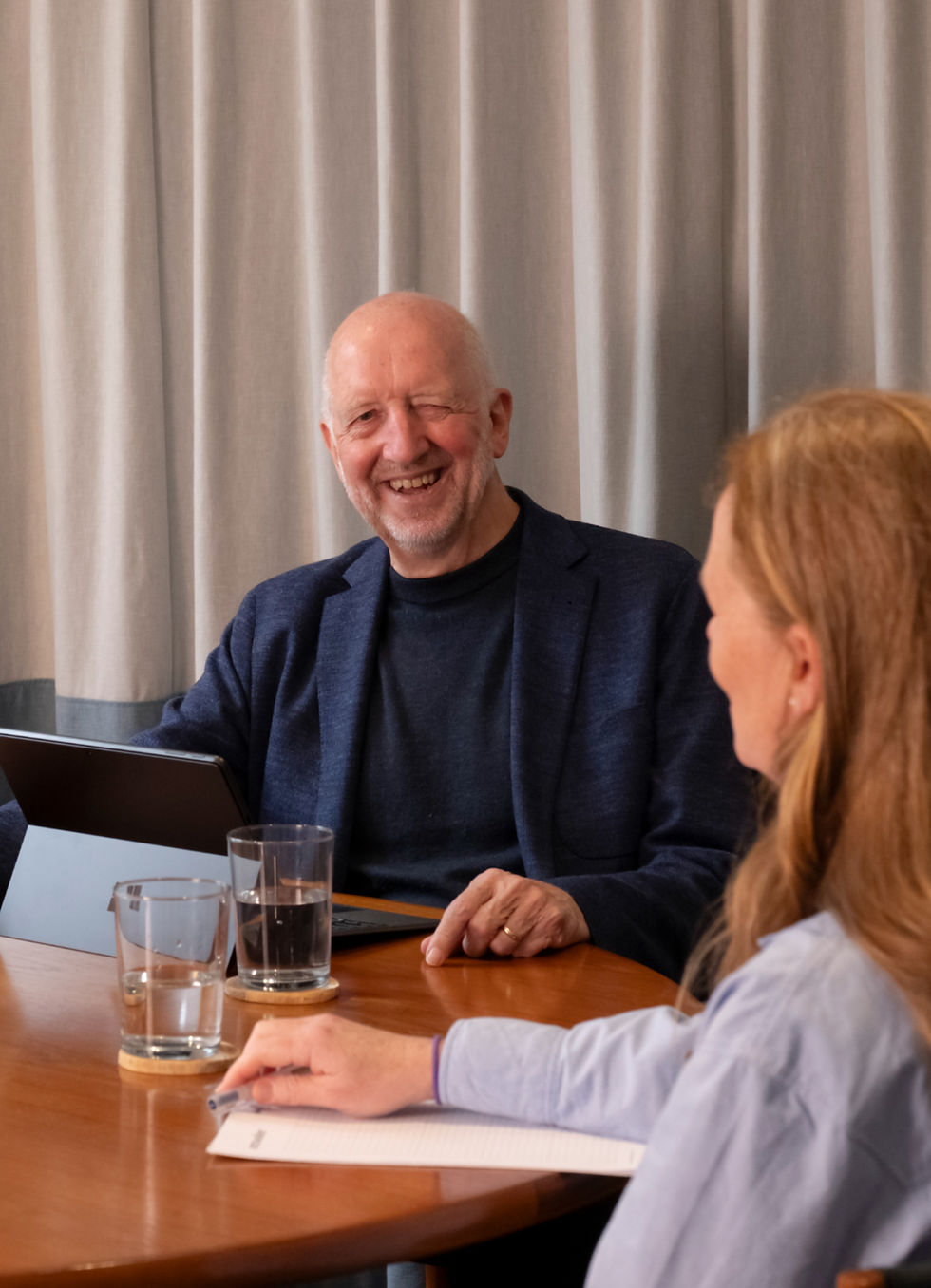
Ross Clark has worked across the architecture industry in almost every capacity — the guidance that he brings from decades working in this industry has been tried, tested and refined working closely with practices just like yours.
If you’re thinking about the next stage of your practice, or want an experienced perspective on how things are currently set up, please reach out.


