

Why succession planning starts earlier than most architecture practices think
Succession planning is one of those subjects architecture practices often leave too late.
Not because it’s unimportant. Most practice owners understand, at least in principle, that the future of the business can’t depend forever on the same people. They know leadership must eventually transfer, clients must be retained, ownership may need to change, and the practice should remain strong beyond the energy and presence of its founders.
But dealing with succession is easy to defer.
There is always a more immediate project, client issue, staffing problem, fee proposal or delivery deadline. Succession feels important but not urgent. It sits somewhere in the future, waiting for the right moment.
The problem is that, by the time succession becomes urgent, many of the conditions needed for it to succeed should already have been built.
Which is why succession planning must start much earlier than most leaders think.

Succession is not just an exit event
Too many practices think about succession only when a principal is preparing to retire, step back or sell their interest. By then, the conversation can become narrow and pressured. Who will buy in? What is the practice worth? Can the next generation afford it? Will the clients stay? What happens if no one is ready?
These are important questions, but they are not the beginning of succession planning. They are the later consequences of whether succession has been built into the practice over time.
Succession is not simply the transfer of shares, title or ownership. It is the transfer of trust, capability, authority, judgement and confidence.
Clients need to trust someone else.
Staff need to believe leadership is credible.
Emerging leaders need real responsibility before the handover point.
The business needs systems that don’t depend entirely on the memory and instincts of one or two people.
If those conditions are missing, a legal or financial succession plan may exist on paper, but the practice may still not be ready.
The founder-dependency problem
Many architecture practices are built around the founder or a small group of principals. That can be a strength in the early years. The founder’s reputation, energy, judgement and relationships often help the practice survive and grow.
Clients want the founder involved. Staff look to the founder for direction. Decisions flow through the founder because that is where the experience sits. The practice’s identity becomes closely tied to that person’s standards, relationships and instincts.
This is understandable.
But if it continues for too long, then what might have been a strength becomes a constraint.
A founder-dependent practice may struggle to transfer client confidence. Emerging leaders may never develop full authority because the real decisions remain elsewhere. Staff may talk about leadership succession but still behave as though the founder is the final answer. Clients may say they trust the practice, but actually mean they trust one person.
That is not yet succession readiness.
The question isn’t whether the founder or principal remains valuable. Of course they do. The question is whether their value has been translated into the wider practice…
Has their judgement been shared?
Have their standards been made visible?
Have clients experienced confidence in others?
Have younger leaders been allowed to carry responsibility while support is still available?
Has the practice become strong enough to continue without constant founder intervention?
These questions need to be asked while there is still time to act on the answers.
Ownership isn’t the same as leadership.
Succession becomes difficult when practices confuse ownership and leadership.
A person may be a strong architect and still not be ready to own the business. Another may have commercial potential but lack leadership maturity. Someone else may be loyal and capable, but not interested in the financial risk of ownership. A future owner may need development in client relationships, financial management, people leadership, strategy and difficult decision-making long before any ownership conversation becomes serious.
The mistake is to treat succession as a reward for tenure or technical capability.
Ownership changes the nature of a person’s responsibility. It is not just recognition. It is a commitment to the future of the practice, its people, its clients, its risks and its commercial health.
That requires a broader view of capability.
Can this person lead others?
Can they make difficult decisions?
Can they manage client trust?
Can they understand financial performance?
Can they think beyond their own projects?
Can they carry the practice’s reputation without simply imitating the current principals?
These questions may feel demanding, but they are fair. A succession pathway shouldn’t set people up to inherit a role they do not properly understand or may not genuinely want.
The next generation needs real authority before it needs ownership.
One of the best ways to test succession readiness is to give emerging leaders meaningful authority before ownership is on the table.
Not symbolic authority. Real authority to:
lead client relationships.
manage commercial conversations.
make project decisions.
mentor others.
contribute to strategy.
be seen inside and outside the practice as part of its future.
This does not mean abandoning support or allowing people to make avoidable mistakes. It means creating a staged transfer of responsibility, where emerging leaders can grow while experienced principals are still close enough to guide, challenge and protect.
If future leaders are only given authority at the point of transition, the practice is taking a large risk. Clients may not be ready. Staff may not be convinced. The emerging leaders themselves may not yet have built the judgement required.
Succession works better when confidence is built gradually.
The principal learns to let go.
The emerging leader learns to carry weight.
The team learns to trust the new authority.
The client learns that the practice is more than one person.
This is succession in practice, not just succession in theory.
Value depends on transferability
Many practice owners hope their practice will have value when they eventually step back. That is reasonable. They may have spent years, even decades, building reputation, relationships, systems, goodwill and market position.
But the value of a practice depends heavily on whether that value is transferable.
If most client relationships sit personally with one principal, value is harder to transfer. If project knowledge depends on informal memory, value is harder to transfer. If leadership authority is concentrated too tightly, value is harder to transfer. If the practice’s reputation is really the founder’s reputation, value is harder to transfer.
This is one reason succession is not only a people issue. It is a business model issue.
A practice that wants to create future value needs to build systems, relationships and leadership capacity that can survive beyond the current owners. This does not mean stripping the practice of personality. Architecture practices should not become faceless. But they do need to become less fragile.
Transferable value is built through disciplined management: clear roles, strong client records, reliable project systems, shared standards, visible future leaders, financial clarity and a brand that doesn’t depend entirely on one person’s presence.
Without these, the practice may be respected but difficult to sell, transition or sustain.
The emotional side of succession
Succession is not only commercial. It is deeply personal.
For many architects, the practice is more than a business. It carries identity, reputation, sacrifice, relationships and pride. Letting go can therefore feel like more than a change in role. It can feel like a loss of relevance or control.
This emotional dimension is often under-discussed.
A principal may say they want the next generation to step up, while continuing to override their decisions. They may want to reduce their workload, while still remaining central to every important client conversation. They may want the practice to become less dependent on them, while finding it difficult to watch others do things differently.
This does not make them unreasonable. It makes them human.
But the tension needs to be recognised.
Succession requires the current leaders to change, not just the future leaders. The practice cannot transition if the next generation is expected to grow but the existing leadership model remains untouched.
At some point, the principal has to become less necessary.
That can be confronting. It can also be one of the most valuable contributions they make to the long-term future of the practice.
Start before you need to
The best time to begin succession planning is not when retirement is close or ownership pressure becomes unavoidable. It is when the practice still has time to build the conditions for a successful transition.
That means identifying potential future leaders early. It means discussing appetite, not just capability. It means developing commercial understanding, client confidence and people leadership. It means making the practice less dependent on individual memory and relationships. It means allowing future leaders to become visible before they are expected to carry everything.
It also means being honest.
Not every senior person wants ownership. Not every capable architect is a future principal. Not every practice has a natural successor inside the business. Not every founder is ready to step back when they first say they are.
These truths are much easier to face early.
Succession planning is really a question of continuity. What should continue? What should change? Who is capable of carrying the practice forward? What must be built now so the future is not forced later?
For architecture practices, this is not a retirement exercise.
It is a leadership discipline.
The practices that handle succession well do not wait for the handover moment to create future leaders. They build the future into the practice long before it is needed.
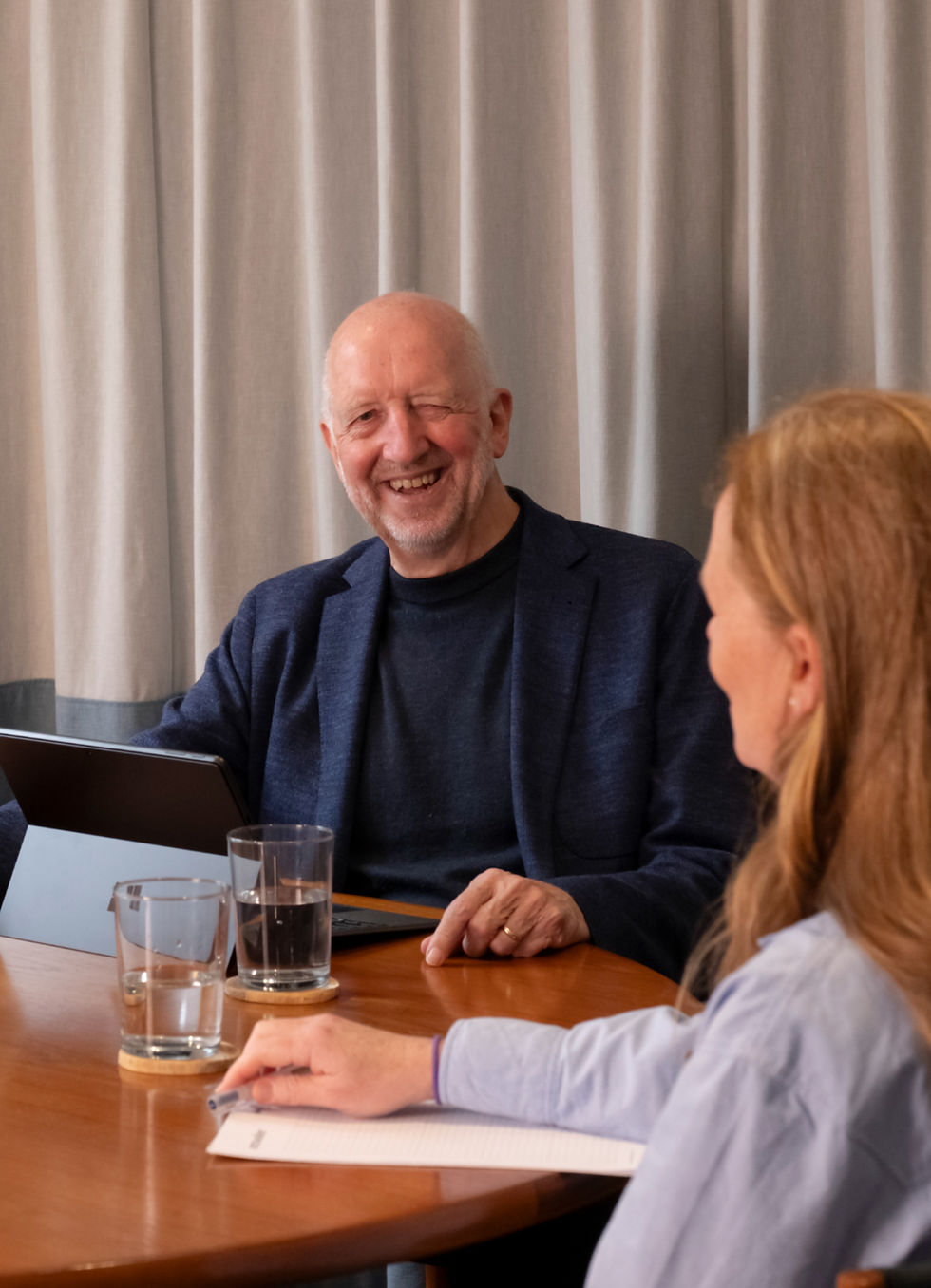
Ross Clark has worked across the architecture industry in almost every capacity — the guidance that he brings from decades working in this industry has been tried, tested and refined working closely with practices just like yours.
If you’re thinking about the next stage of your practice, or want an experienced perspective on how things are currently set up, please reach out.
