

Architects aren’t in the Buildings business, they’re in the Trust business
Architects tend to think of their work in terms of buildings.
That is understandable. Buildings are the visible outcome. They are what clients occupy, visit, lease, sell, promote, photograph and remember. They are what architects draw, model, document, coordinate and eventually see made real.
But if you ask clients why they return to the same architect, the answer is often less about the building than architects expect.
I once heard a developer explain why they had reappointed the same small architectural practice across several projects. It was not because they were the cheapest. It was not because they had the biggest profile. It was not even because they were the most visually impressive practice available.
The reason was simpler and more powerful:
“They make it easy to trust them.”
That sentence says a lot about the real business architects are in.

The building is the outcome. Trust is the product.
This is not to diminish architecture. Design quality matters enormously. Technical competence matters. Documentation matters. Planning strategy matters. Contract administration matters. The building is not secondary.
But the client does not experience architectural service only at the end of the project. They experience it every time they make a decision, receive advice, face uncertainty, deal with cost pressure, speak to a stakeholder, respond to authority feedback, or wonder whether the project is still on track.
At each point, the client is asking themselves a version of the same question:
“Can I trust this architect?”
Trust is not built by charm alone. Nor is it built by saying “you can trust us.” It is built through repeated evidence.
You say what you mean, don’t hide bad news, acknowledge uncertainty, and always follow through.
You understand the client’s priorities, keep effective records, and make the whole process easier to navigate.
Over time, these behaviours become the service.
The building may be the final product, but trust is what the client is buying all the way through.
Clarity is one of the strongest forms of care
Architects often think of care in terms of design attention, client responsiveness or willingness to go the extra mile. These are valuable, but there is another form of care that is sometimes underestimated: clarity.
Clear advice is care.
Clear process is care.
Clear scope is care.
Clear records are care.
Clear expectations are care.
Clients are not helped by ambiguity dressed as flexibility. They are not helped by architects who avoid difficult conversations until the problem becomes more serious. They are not helped by promises that sound reassuring but lack practical substance.
Many clients do not know how to be good architectural clients. They may not know what decisions they need to make, when they need to make them, or what happens if they delay. They may not understand the difference between design development, documentation, authority requirements and builder-driven change. They may not understand how much risk sits inside a seemingly simple request.
A good architect helps the client understand these things without making them feel foolish.
That is trust-building work.
Alignment is not automatic
A client and architect may begin a project with goodwill and still drift apart.
The client believes one thing has been agreed.
The architect believes another.
The client assumes the architect understands what matters most.
The architect assumes the client understands the implications of a decision.
These small gaps can widen quickly.
Trust depends on alignment, and alignment needs to be actively managed. It is not enough to have a good first meeting or a warm relationship at the beginning. As pressure increases, the relationship needs structure.
That structure might include a strong brief, clear decision points, properly recorded approvals, regular review of priorities and honest discussion of risk. None of this needs to feel bureaucratic. Done well, it gives the client confidence that the process is being led rather than simply allowed to unfold.
Clients do not need architects who merely agree with them. They need architects who can help them stay aligned with the project’s purpose, constraints and consequences.
Why trust creates repeat work
Repeat clients are rarely won through design talent alone.
They return because the architect has reduced anxiety. They return because the architect has made the process intelligible. They return because the architect has shown judgement under pressure. They return because the architect has protected them from mistakes they may not even have recognised at the time.
That does not mean every client relationship will be easy. Some clients are difficult. Some are unclear, demanding or commercially unrealistic. But strong practices understand that client trust is not a soft idea. It is a commercial asset.
Trust improves communication.It reduces friction.It supports better decisions.It makes difficult conversations easier.It creates referrals.It increases the chance of future work.
In that sense, trust sits close to the centre of practice success.
Architects may be commissioned to design buildings, but clients return to practices that help them feel understood, guided and protected.
That is why architects are not really in the business of buildings alone.
They are in the business of trust, clarity and alignment.
The building is what makes that visible.
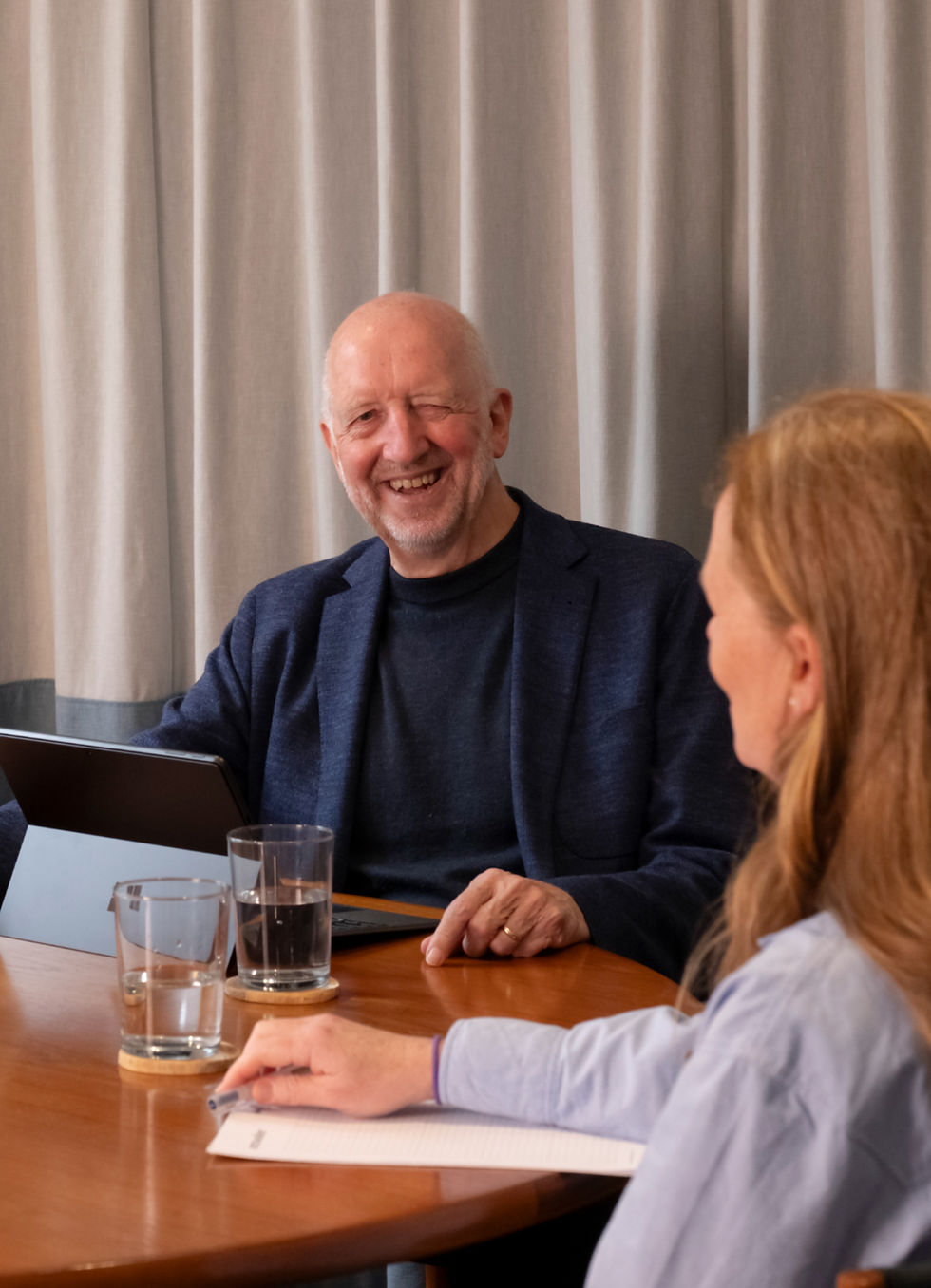
Ross Clark has worked across the architecture industry in almost every capacity — the guidance that he brings from decades working in this industry has been tried, tested and refined working closely with practices just like yours.
If you’re thinking about the next stage of your practice, or want an experienced perspective on how things are currently set up, please reach out.


